


Comfort and elegance
Because you should not have to choose between peace and quiet and good looks.
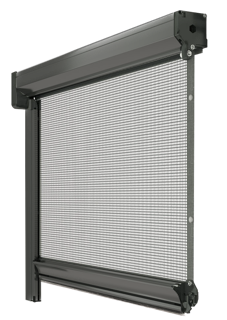
A human-sized company at the service of your insect screens
- Excellent finish quality
- Simple to fit and to use
- Economique
- Wide colour range
Private customer
Trade customer
-
Obtenez votre devis gratuit en ligne pour votre Volet Roulant rénovation fourni et installé par nos Artisans
Get your free online quote for a replacement roller shutter, supplied and installed by our craftsmen
Get your free online quote for a renovation roller shutter, supplied and fitted by our craftsmen
-
Vous cherchez un fournisseur, nous vous proposons un partenaire
Looking for a supplier? We will offer you a partner.
Private customer
Trade customer
-
Parce que nous travaillons pour eux, nous connaissons les installateurs de confiance. ROLHEUR MyVolet vous oriente.
Because we work for them, we know the fitters you can trust. ROLHEUR MyVolet will point you to one.
-
Vous cherchez un fournisseur, nous vous proposons un partenaire
Looking for a supplier? We will offer you a partner.
"Because we make closures too, we offer insect screens that are built to last — and to be used."
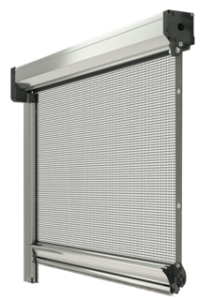
Elegant lines...
...in the elegance of aluminium
Our designed profiles fit your openings exactly, protecting you discreetly.
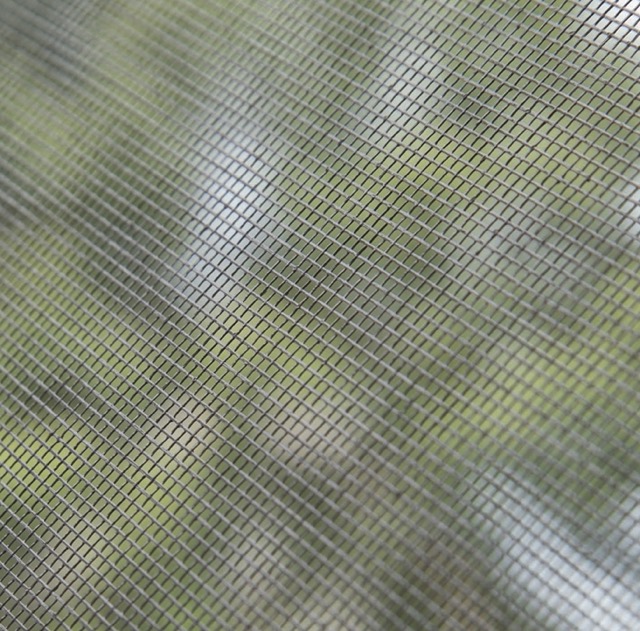
High-performance meshes
Far more than an insect screen
High-contrast / high-transparency / anti-pollen / reinforced mesh
Find out more
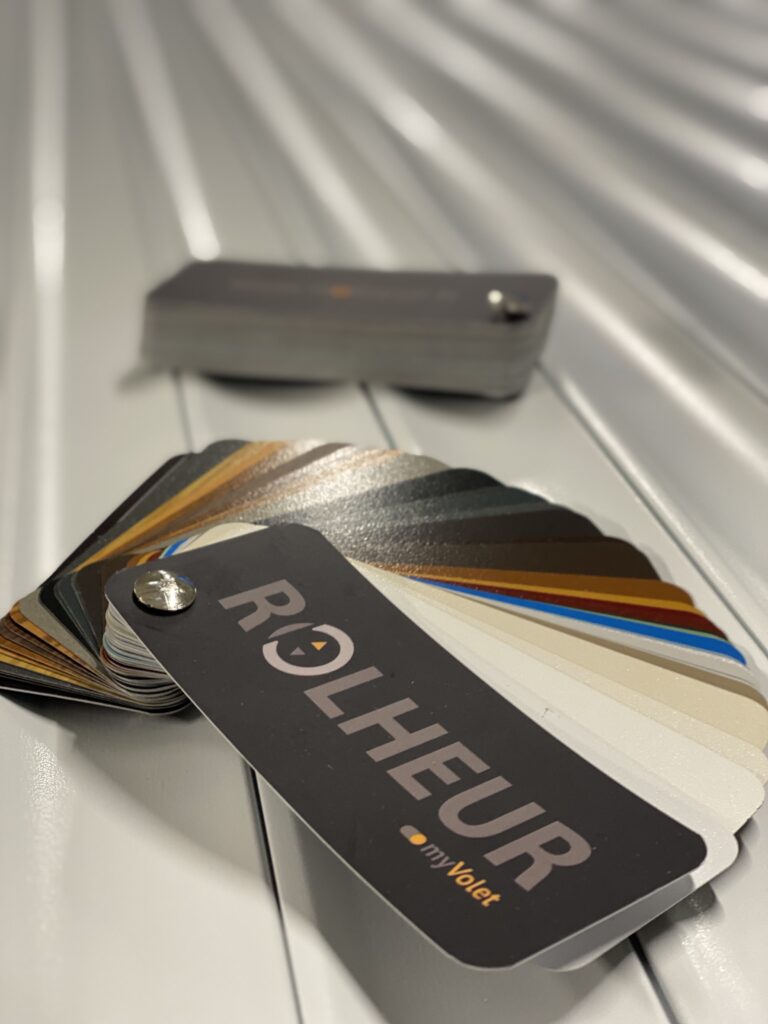
The colour you need...
...for perfect harmony between windows and screens
With a colour chart running from the most current shades to the most traditional, Rolheur MyVolet lets you match your screens to what you actually want.
Elegant lines, in the elegance of aluminium
Our designed profiles fit your openings exactly, protecting you discreetly.
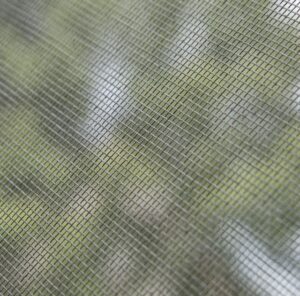
Far more than an insect screen
High-contrast / high-transparency / anti-pollen / reinforced mesh
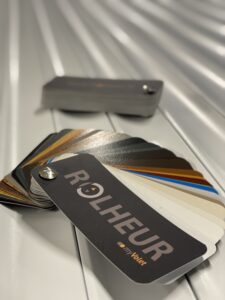
The colour you need
With more than 213 RAL colours available, your insect screens become invisible
Elegance and quality at the service of your comfort
Rolheur MyVolet offers Mousti-Rolh, a high-end insect screen with contemporary lines and finishes.
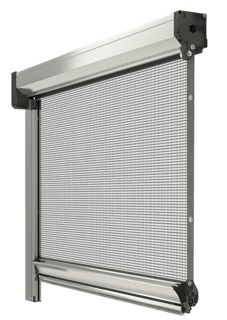
Mousti-Rolh
1 – Internal mechanism
2- Joint PVC
3- Coulisses
1 – Internal mechanism
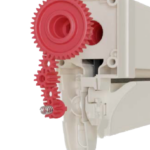
Les ressorts de nos moustiquaires sont extrêmement robustes, silencieux et la vitesse de remontée est réglable, même moustiquaire installée.
The springs in our insect screens are extremely robust and silent, and the retraction speed is adjustable even once the screen is installed.
2- Joint PVC
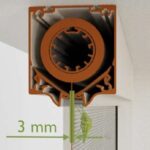
Nos moustiquaires sont dotées d’un ou deux joints au niveau de l’enroulement pour empêcher toute intrusion d’insectes volants ou rampants, améliorant ainsi le confort d’utilisation et la durée de vie de la moustiquaire.
Our insect screens have one or two seals at the roll-up point to prevent any flying or crawling insect getting in, improving both comfort of use and the screen’s service life.
3- Coulisses
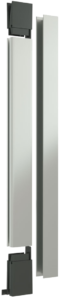
Nos moustiquaires sont dotées de coulisses télescopiques, réglables (pour rattraper les faux-aplombs) et de brosses empêchant les insectes de pénétrer à l’intérieur par les côtés.
Our insect screens have telescopic guide rails, adjustable to take up any out-of-plumb, plus brushes that stop insects getting in at the sides.
Meshes that offer far more than a mosquito barrier
Our meshes protect you from flying insects, crawling insects and pollen, and offer the best available in terms of visual performance.
Toile standard grise VS Toile noire "Haut Contraste"
It has been established that standard grey meshes, although apparently brighter, offer less contrast and therefore “veil” the view more than black high-contrast meshes. That is why Rolheur fits high-contrast mesh as standard: slightly less bright, but a truer rendering of the detail outside.
- Epaisseur de fil : 0,3mm
- Toile en fibre de verre
- Luminosité
- Protection moyenne contre les pollens
- Contraste
- Epaisseur de fil : 0,3mm
- Toile en fibre de verre
- Contraste
- Protection moyenne contre les pollens
- Luminosité
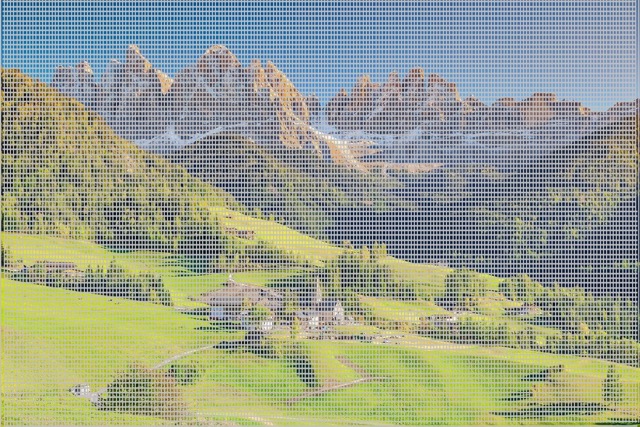
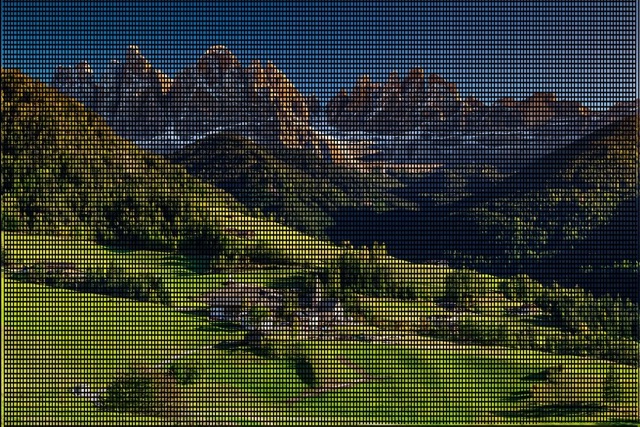
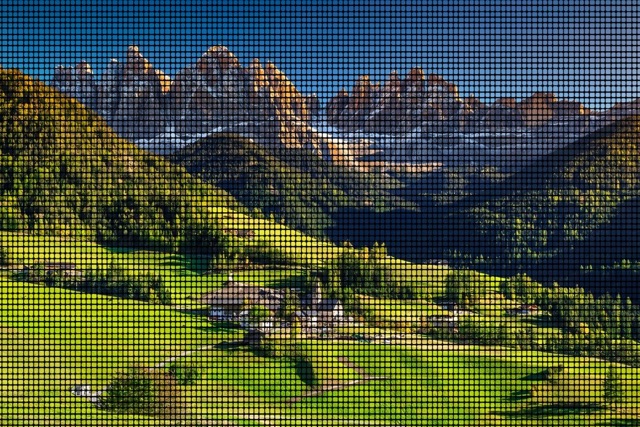
Toile standard grise VS Toile "Haute Transparence"
If you want an even more discreet mesh, you can choose a high-transparency mesh. By reducing the thickness of the thread, we reduce the veil the screen puts over the view. Naturally, this mesh is less robust.
- Epaisseur de fil : 0,3mm
- Toile en fibre de verre
- Luminosité
- Protection moyenne contre les pollens
- Contraste
- Epaisseur de fil : 0,25 mm
- Toile en fibre de verre
- Contraste
- Luminosité
- Transparence
- Protection contre les pollens
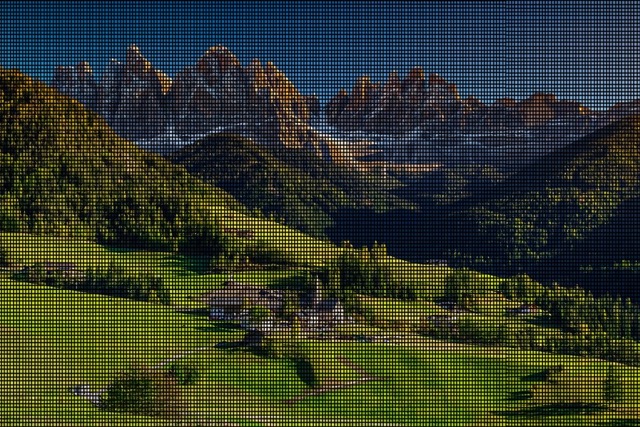
Toile standard grise VS Toile "Anti-Pollen"
Did you know that a standard insect screen protects you from the most common pollens in France? If you suffer from pollen allergies, however, Rolheur takes protection a step further. Our anti-pollen meshes have a tighter weave, so you are protected far more effectively against the commonest tree allergens. A simple, ecological and economical solution.
- Epaisseur de fil : 0,3mm
- Toile en fibre de verre
- Luminosité
- Protection moyenne contre les pollens
- Contraste
- Epaisseur de fil : 0,22 mm
- Toile en fibre de verre
- Protection contre les pollens
- Contraste
- Luminosité
See also our side-sliding insect screens
Colours that look like you
With a colour chart running from the most current shades to the most traditional, Rolheur MyVolet lets you match your screens to what you actually want.
Everything you need to know about insect screens
Rolheur insect screens are extremely useful for protecting your home against invading insects, while also improving air quality thanks to their anti-pollen function. In this article we look in detail at their benefits, their discreetness and their transparency, as well as why choosing a quality insect screen matters.
Rolheur insect screens offer many advantages:
- Effective protection against insects: stops mosquitoes, flies, wasps, bugs and other pests getting into your home, without using any chemicals.
- Anti-pollen function: helps improve indoor air quality by keeping pollen outside, which can be a real benefit for anyone who suffers from allergies.
- Discreetness: designed to look good and to blend harmoniously into the frame of your openings (windows, doors).
- Transparency: lets you enjoy an unobstructed view outside while staying protected from insects and pollen.
- Flexibility: they can be fitted to windows as well as doors, and adapt to openings of many different sizes.
Discreet, transparent protection
Our vertical and side-sliding insect screens offer excellent protection against insects and allergens. Their fine fibreglass mesh is designed to be both tear-resistant and extremely transparent. With their discreet, elegant frame, our screens are easy to forget once they are in place. They preserve the beauty of your interior and let you make the most of your outdoor spaces while keeping insects and pollen out.
What is more, thanks to their clever design, our vertical and side-sliding screens fold away easily, making it simple to let air circulate and ventilate your home without any of the nuisance caused by insects or allergens.
With so many models available on the market, it is essential to choose a quality insect screen that will meet your needs. Here are a few criteria to bear in mind:
- The material: choose a PVC-coated fibreglass mesh, which offers high resistance to tearing, corrosion and UV, while remaining light and easy to maintain.
- The finish: an aluminium frame is preferable, both for better durability and to stop the screen sagging over time.
- The fixing system: favour clip or screw fixings, which are stronger and longer-lasting than hook-and-loop systems.
- The dimensions: make sure the screen will fit your openings (windows, doors) perfectly by checking their dimensions carefully. That may sound simple, but have you thought about how far out of plumb your openings are? Out of level? Out of square? Nothing replaces a professional. Rolheur Fermetures approved installers are there to advise you.
- The installation: face-fixed, within the reveal, or recessed. Our installers will advise you on the best way to fit your insect screen.
The ideal insect screen: a made-to-measure screen
For optimum protection, there is nothing better than a cut-to-size screen, matched precisely to the dimensions of your window or door. This type of screen can be cut down and also adjusted in both height and width, so it fits every shape and size of opening perfectly. By choosing a made-to-measure Rolheur Fermetures screen, you get a high-end product tailored to you, offering maximum comfort and protection.
There are several different models:
- Vertical roller insect screen: easy to install and ideal for windows, it is screw-fixed and retracts into a headbox when not in use.
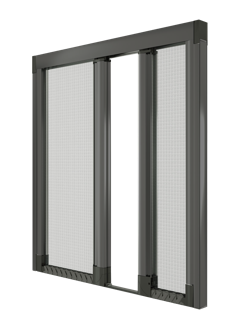
- Cut-to-size pleated side screen: designed especially for doors, this screen has two leaves that meet in the middle and open sideways. It also has an extra-flat threshold for easy passage.
- Cut-to-size fixed-frame screen: suitable for both windows and doors, this screen has the advantage of being very economical and easy to fit.
Rigorous testing for maximum protection
To guarantee effective protection against insects and pollen, it is essential to choose a screen that has undergone rigorous testing. For example, put it through a tensile test to check its strength, or expose it to UV to assess how well it stands up to the weather. An OEKO-TEX® certified screen is also proof of the product's quality and a guarantee that it is free of substances that are harmful to health.
If you have roller shutters, an insect screen can be fitted inside the shutter box. This solution lets you enjoy all the benefits of an insect screen with a completely integrated, discreet system. Do remember to consult a Rolheur professional to make sure your roller shutter is compatible with an insect screen installation and to guarantee the best possible result.
In conclusion, vertical and side-sliding insect screens are an ideal solution for effective protection against insects and pollen while enjoying perfect discreetness and transparency. Take care to choose a quality screen, bearing in mind the points above, and one suited to your specific needs.
More about roller insect screens
The roller screen is the one most windows want. The mesh winds onto a spring-loaded roller housed in a slim cassette at the head of the opening, and pulls down in front of the window. Let go and it returns on its own; stop it halfway and it stays there.
How it is built
The cassette and the side channels are powder-coated aluminium, in a colour matched to your joinery — anthracite and white are the usual choices, but the range follows the RAL chart. The mesh runs in the side channels, which is what keeps it in place when a window is open and the air moves through.
The roller is fitted with an adjustable spring. That single component decides whether a screen still works properly after three seasons: too weak and the mesh sags, too strong and the handle snaps back. Ours can be re-tensioned rather than replaced.
Choosing the mesh
- Standard grey. The general-purpose mesh, the most discreet from outside.
- High transparency. A finer thread and a more open weave, when the view is the reason you bought the house.
- High contrast. Easier to read through against strong backlight, useful on a south-facing window.
- Fine mesh. A tighter weave for the smallest insects.
- Anti-pollen. Filters a large part of airborne pollen, for hay fever sufferers.
Where it is not the right answer
On a French door or a wide sliding bay, a roller screen means winding a tall drop of mesh up and down every time you go out. For those openings a side-sliding screen is better, and past a certain size a motorised screen is better still.
Ordering
Screens are made to the measurements taken at the opening and fitted by an approved installer from your area. Send the dimensions and a photo through the quote form, or see the full range of insect screens.