


Innovation and performance
Innovative roller shutters that give you the best of thermal and acoustic insulation
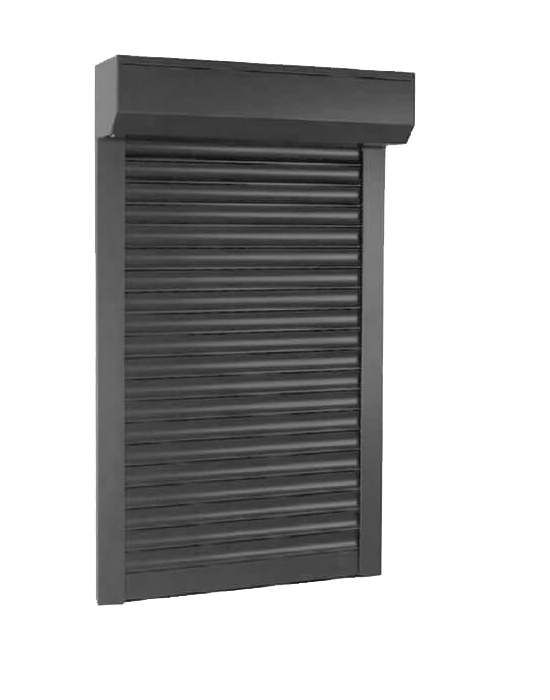
A human-sized company at the service of your roller shutters
- Excellent finish quality
- Insulation for your home
- Increased security
- Wide colour range
- Radio and connected control
Private customer
Trade customer
-
Obtenez votre devis gratuit en ligne pour votre Volet Roulant rénovation fourni et installé par nos Artisans
Get your free online quote for a replacement roller shutter, supplied and installed by our craftsmen
Get your free online quote for a renovation roller shutter, supplied and fitted by our craftsmen
-
Vous cherchez un fournisseur, nous vous proposons un partenaire
Looking for a supplier? We will offer you a partner.
Private customer
Trade customer
-
Parce que nous travaillons pour eux, nous connaissons les installateurs de confiance. ROLHEUR MyVolet vous oriente.
Because we work for them, we know the fitters you can trust. ROLHEUR MyVolet will point you to one.
-
Vous cherchez un fournisseur, nous vous proposons un partenaire
Looking for a supplier? We will offer you a partner.
Roller shutters that adapt to what you expect
Motorised
Wired, radio or solar — ask our installers for advice
Centralised
Operate all your roller shutters with a single click.
Connected
Control your roller shutters from your smartphone, wherever you are.
Insulated slats
For better thermal and acoustic performance
Fitting type
Under the lintel, face-fixed on the façade or traditional. Ask us for advice.
Luxury
From the anti-intrusion roller shutter to the bioclimatic slat, we innovate to give you an exceptional product.
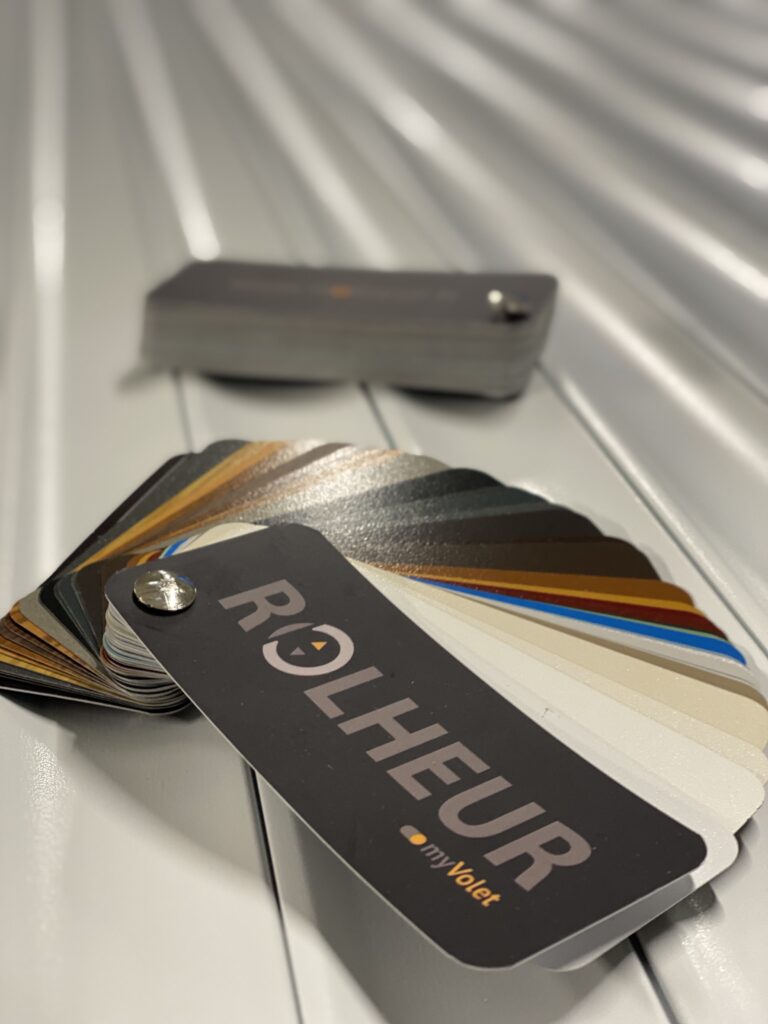
Colours that look like you
With a colour chart running from the most current shades to the most traditional, Rolheur MyVolet lets you match your roller shutters to what you actually want. And because nothing is warmer than wood, we make wood-effect roller shutters so you get every advantage of a modern shutter with the charm of the natural material.

3 motor types, 1 obsession: innovation
Rolheur MyVolet works mainly with Somfy, a French brand and the reference in roller shutter motorisation.
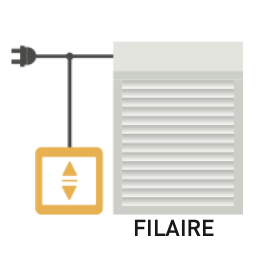
Wired motor
The motor is powered from the mains and the control is wired, meaning the switch is connected to the motor by a cable. This is the type that needs the most building work if the existing installation does not already provide for it.
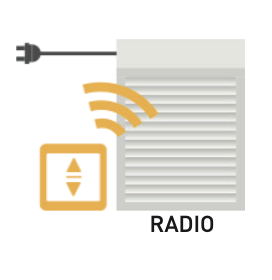
Radio motor
The motor is powered from the mains and the control is by radio, meaning the switch talks to the motor wirelessly. You can put the switch wherever suits you, with no building work.
Solar motor
The motor runs on solar power and the control is by radio. Installation is simplified and you need no electrical work to power the shutter.
- Batterie 12V
- Autonomie : 45 jours en obscurité totale (2 cycles par jour)
- Garantie 7 ans
- Compatible neuf ou rénovation
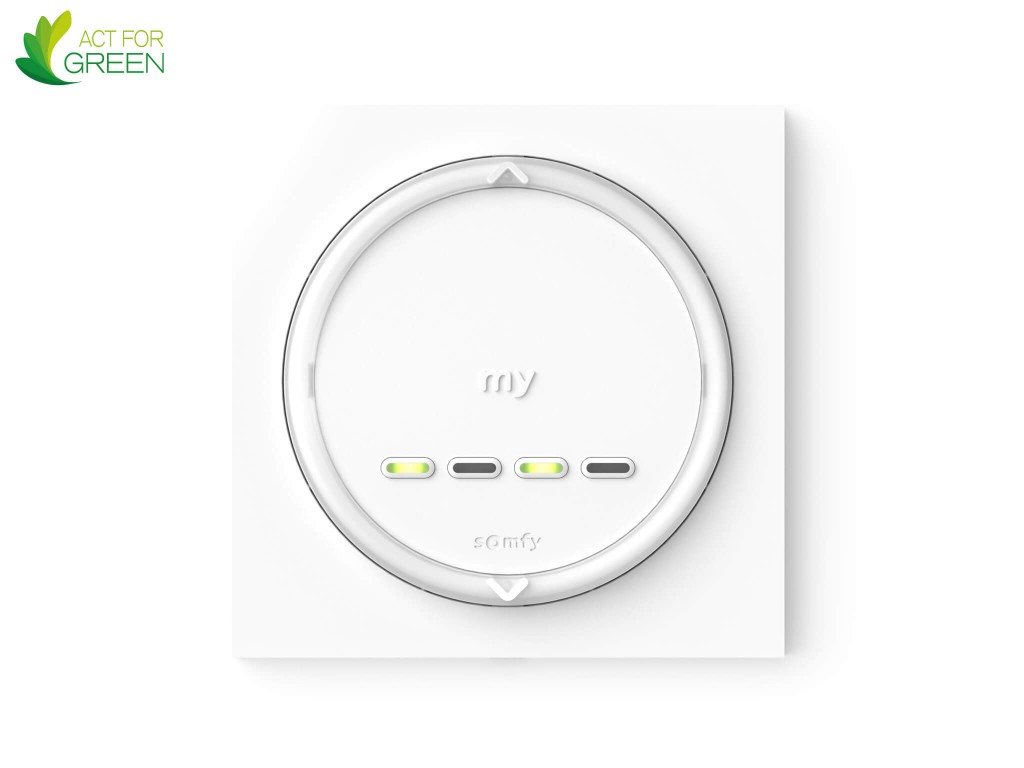
One handset for all your shutters
With a single click you operate all your shutters, together or by zone.
- CANAL 1 : Tous les volets de la maison
- CANAL 2 : Tous les volets du Rez-de-chaussé
- CANAL 3 : Tous les volets de l'étage
- CANAL 4 : Tous les volets exposés au sud
- CANAL 5 : Tous les volets non munis de grilles de protection
- CANAL 1 : Tous les volets de la maison
- CHANNEL 2: all the shutters on the ground floor
- CHANNEL 3: all the shutters upstairs
- CHANNEL 4: all the south-facing shutters
- CANAL 5 : Tous les volets non munis de grilles de protection
- CHANNEL 1: every shutter in the house
- CHANNEL 2: every shutter on the ground floor
- CHANNEL 3: every shutter upstairs
- CHANNEL 4: every south-facing shutter
- CHANNEL 5: every shutter without protective grilles
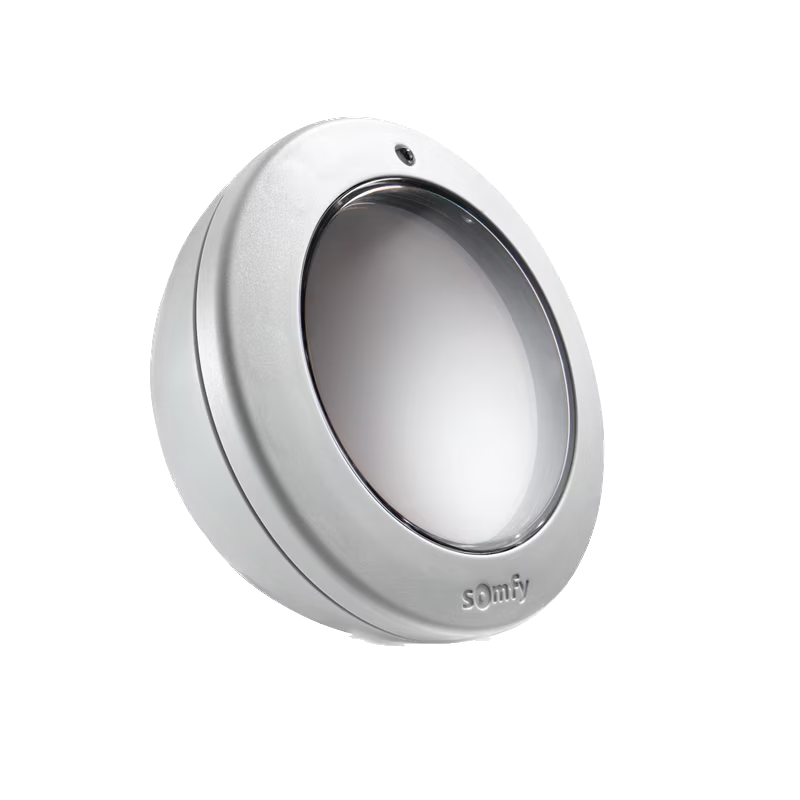
Smart shutters...
Your shutters automatically regulate how much sun comes in, close when your alarm detects an attempted intrusion, and open at sunrise.
- Tous les volets roulants sont compatibles avec nos solutions
- Il suffit de l'équiper d'un moteur à commande radio
- Installation simple et peu onéreuse
- Compatible neuf ou rénovation
- All roller shutters are compatible with our solutions
- It simply needs a radio-controlled motor
- Simple, inexpensive installation
- Suitable for new build or renovation
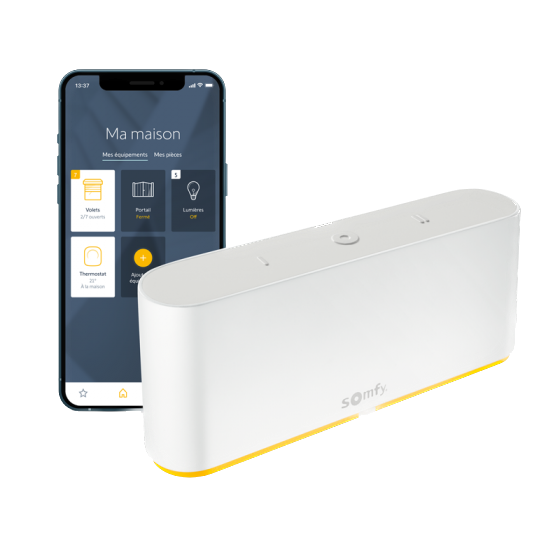
...and connected
With the Tahoma Switch box you drive your roller shutters straight from your smartphone. Compatible with more than 300 connected SOMFY devices, Tahoma improves the comfort, the ease of use and the security of your home.
- Complet : connectez vos lumières, thermostat, stores, pergolas, musique, rideaux, caméras, alarme...
- Scenarios : d'un clic, vous effectuez un ensemble de tâches prédéfinies
- Garantie 5 ans
- Simple : connectez vos appareils a la box en un clic
- Complete: connect your lights, thermostat, blinds, pergolas, music, curtains, cameras, alarm…
- Scenarios: with one click you run a whole set of predefined actions
- Garantie 5 ans
- Simple : connectez vos appareils a la box en un clic
- Le matin au lever :
- Les volets roulants s'ouvrent sauf ceux des enfants
- Le chauffage de la salle de bain se met en route
- L'alarme et les caméras se coupent
- La musique se met en route dans la cuisine
- Le matin au lever :
- Les volets roulants s'ouvrent sauf ceux des enfants
- Le chauffage de la salle de bain se met en route
- The alarm and cameras switch off
- La musique se met en route dans la cuisine
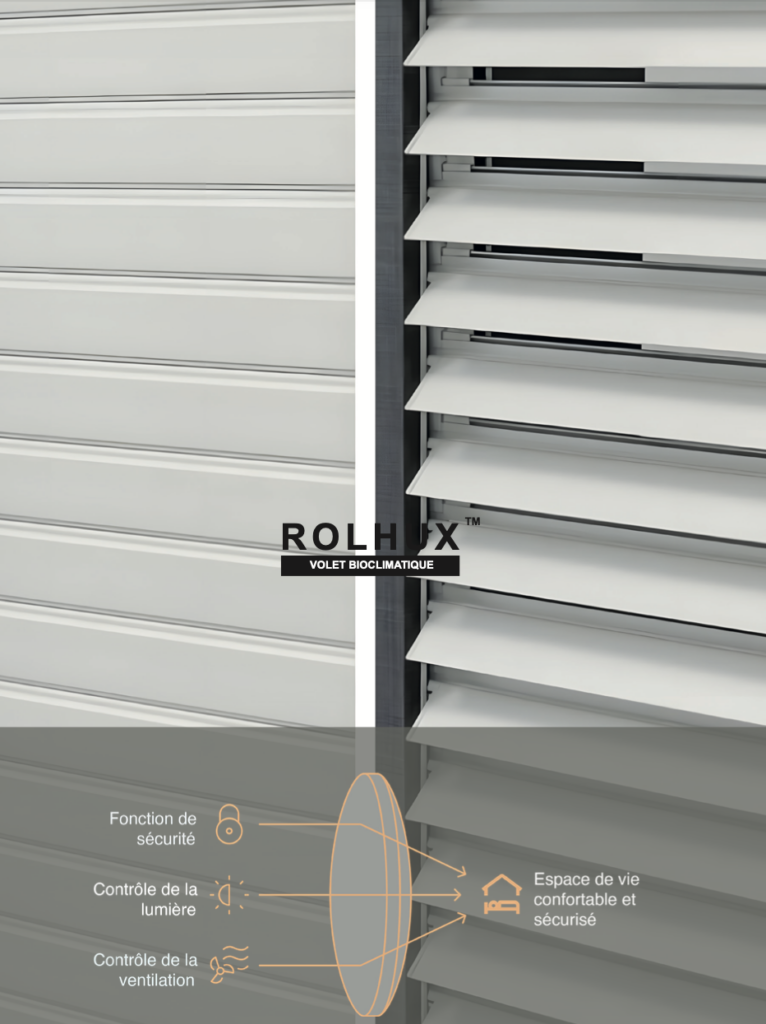
ROLHUX: the bioclimatic roller shutter
The comfort of a louvred shutter, the simplicity of a roller shutter
Thanks to its rotating slats, Rolhux does more than secure your openings. It lets you adjust how much light and air comes in, turning each room into a space matched to your own needs for comfort and privacy. Paired with the AMY control point above, it works wonders in helping you make the most of your interior.
SECURITY: the anti-intrusion roller shutter
The Security 3.0 solution
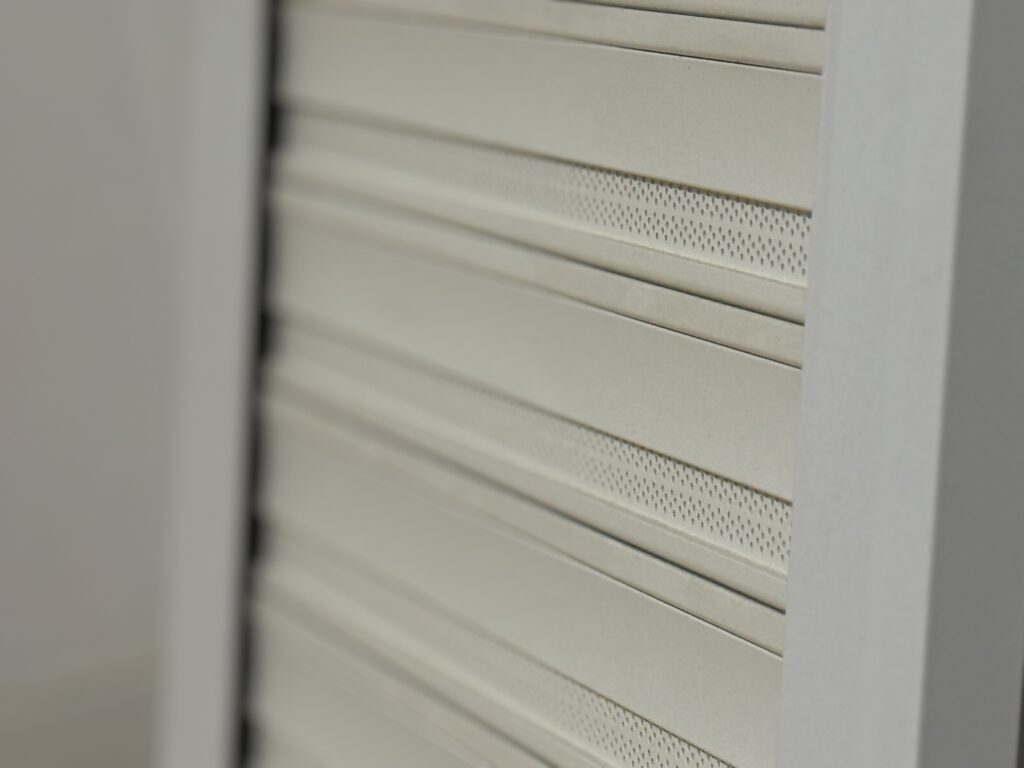
The new Security range is an innovative line of extruded aluminium roller shutters combining security, comfort and insect protection. Its modern design and advanced technical specification deliver better ventilation, more natural light and reinforced resistance to pests.
Roller shutter fitting types
Rolheur MyVolet manufactures your roller shutters for new build or renovation.
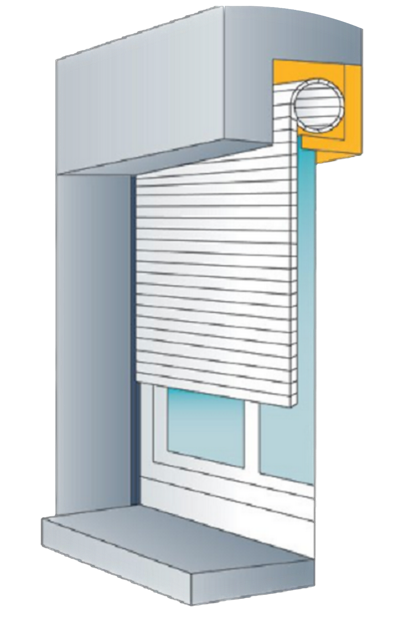
Traditional fitting
The shutter sits in a box above the window. The barrel and motor are reached through a hatch inside the room. The barrel is fixed against the masonry.
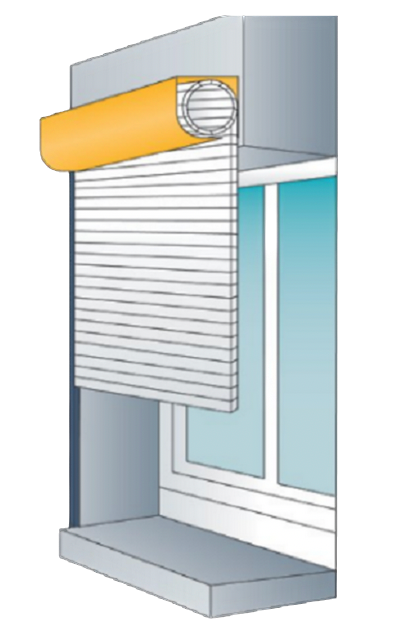
Under-box fitting (monoblock)
The barrel and motor sit in an aluminium box supplied by the manufacturer. This is a renovation fitting: the box is face-fixed on the façade or mounted under the lintel.
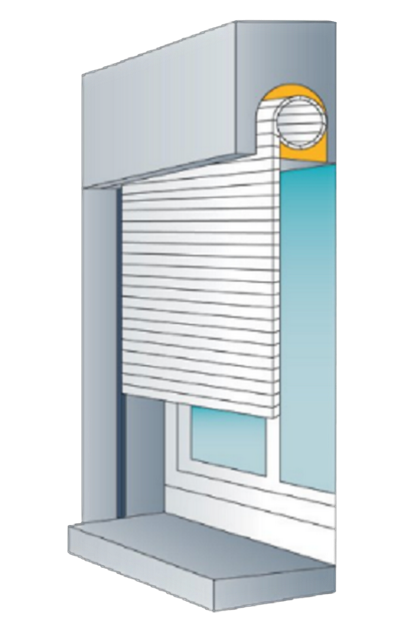
Tunnel fitting
Only possible in new build: the shutter sits in a special insulated box built into the masonry during construction.
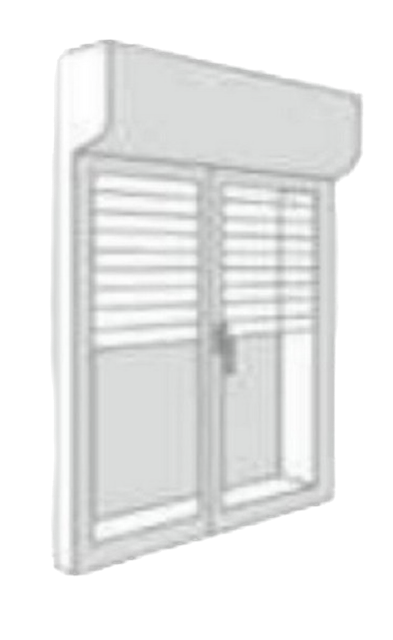
Window block
The shutter is built into the window frame at the factory. This is a new-build fitting only.
Everything you need to know about roller shutters
A roller shutter is made up of several key elements. The box houses the operating mechanism and protects the slats when they are rolled up; face-fixed boxes are generally used in renovation, while under-lintel boxes (tunnel boxes) are usually fitted in new build. The curtain is the set of slats that forms the surface of the shutter and provides both its opacity and its thermal and acoustic insulation; slats can be made of different materials such as aluminium or PVC, and aluminium slats are filled with an insulating material as an option. The guides are the vertical elements that guide the slats as the shutter opens and closes, and also fix the shutter to the window or the wall. The operation is the system that drives the shutter, whether manual (strap, crank) or motorised (switch, handset).
undefined
Optimal thermal and acoustic insulation. Thanks to slats fitted with an integrated insulation system, roller shutters offer additional protection against temperature swings and outside noise. They therefore save energy and improve indoor comfort. Space saving. Unlike hinged or sliding shutters, roller shutters need no side clearance to open and close. They store discreetly in a box inside or outside your window, which optimises the space available. Enhanced security. Roller shutters form an additional barrier against attempted intrusion and vandalism. Some models even have anti-intrusion devices such as automatic locks or reinforced slats. Easy maintenance. Roller shutters need very little upkeep.
Roller shutters can be made from different materials, the most common being aluminium and PVC. Each has specific advantages and drawbacks. Aluminium roller shutters. Advantages: resistance to weather and corrosion; high rigidity, which allows large shutters to be made without risk of deformation; better security thanks to reinforced, intrusion-resistant slats; and a wide range of colours and finishes to personalise your façade. Drawbacks: generally a higher price than PVC, and greater weight, which may call for motorisation to make operation easier. PVC roller shutters. Advantages: often a lower cost than aluminium; light weight, making them easier to install and to operate; and good insulation.
Home automation for simpler, smarter use of your roller shutters. Motorising your shutters and connecting them to a home automation system lets you drive them from a handset, a wall point or a smartphone, group them together, and schedule them to open and close automatically according to the time of day, the sun or the temperature.
More about our roller shutters
A roller shutter is a simple object that goes wrong in predictable ways, and choosing one comes down to three decisions: how the box is fitted, what the slats are made of, and how it is operated. Everything else follows. We manufacture all three families in our workshop at La Gaude, in aluminium and PVC, to the size of your opening.
Three ways to fit a roller shutter
Built-in tunnel box
The box sits inside the wall above the window and stays out of sight. This is the neatest result and the standard choice in new build, because the opening is designed around it. In renovation it means opening up the wall, which is why we rarely recommend it for a replacement.
Monoblock, fitted with the window
The shutter and its box come as one unit and are installed at the same time as the window frame. If you are replacing your windows anyway, this is the moment to deal with the shutters: one intervention instead of two, and a clean junction between the two products.
Renovation model
The box is part of the product and is fixed to the outside face of the wall or under the lintel. No masonry is opened. The box remains visible, and that visible box is precisely the trade-off that saves you the building work. On most replacements this is the right answer.
Aluminium or PVC
PVC is the more economical option and performs perfectly well on standard openings in sheltered positions. Aluminium is stiffer, which matters as soon as the opening gets wide (for very wide bays, see Vision+), and it holds up far better in exposed positions.
On this coast the deciding factor is usually not price but exposure. Facing the sea, aluminium with a properly applied powder coating will outlast PVC, and the difference shows on the fixings and guide rails before it shows on the slats. Inland, on a sheltered elevation, PVC is often the sensible choice and we will tell you so.
Manual, wired, radio or solar
The obstacle to motorising an existing shutter has never been the motor. It is the cable. Running a supply to a wall switch means cutting a channel, sleeving it, filling it, and then repainting a strip that never quite matches.
A radio motor removes half of that problem: the control point becomes wireless and can go wherever suits you. A solar motor removes the cable altogether — a small panel feeds a battery housed with the motor, orders arrive by radio, and the installation stays entirely dry. It is the option we suggest for an isolated opening, an outbuilding with no supply, or a flat where drilling the façade would need a vote at the owners’ meeting.
Solar does have a real limit, and we would rather state it: the panel needs a decent exposure. On a north elevation closed in by a neighbouring building we will steer you back to a mains-fed motor.
We work with Somfy — io-homecontrol, RTS, RS 100, Oximo and Altus — and with CAME radio motors. Which one suits you depends less on the brochure than on your existing installation and how you actually use the shutter.
What we check before manufacturing
- The condition of the existing box: cracks, damp, sagging, and whether the inspection hatch actually opens.
- The reveal and lintel: sound substrate, square angles, a reliable fixing.
- The guide rails: side play, torn brush seals, corroded tracks.
- The real measurements, taken at the top, the middle and the bottom — older local buildings are almost never regular.
- Obstructions: railings, window handles, retained shutters, an existing awning.
- Appearance constraints: building regulations, owners’ association rules, conservation areas.
- Exposure: salt air, wind, full afternoon sun on west-facing elevations.
This survey also exists so that we can say no. We would rather tell you a light solution will not hold than force a product into an opening that will not take it.
Common questions
Can a shutter be replaced without building work?
In most homes, yes — by changing the curtain of slats alone, by re-equipping the existing box, or with a renovation model fixed to the outside. Which of the three applies is decided with the inspection hatch open, not from a brochure.
Will I lose daylight?
Only with a box fitted under the lintel, and only slightly if the box is sized to the actual requirement rather than oversized for convenience.
Do you install the shutters yourselves?
No. We manufacture and supply, and we put you in touch with an approved fitter in your area who already orders from our workshop.
Is the owners’ association’s permission needed?
As soon as the external appearance changes, the owners’ meeting has to approve it, even if no masonry is touched. If you keep the existing colour and model, the case is far simpler to make.
Get a price for your openings
Send us the opening sizes, or simply a photograph and your town. We will tell you which of the three solutions applies to your case, and which one we are ruling out.